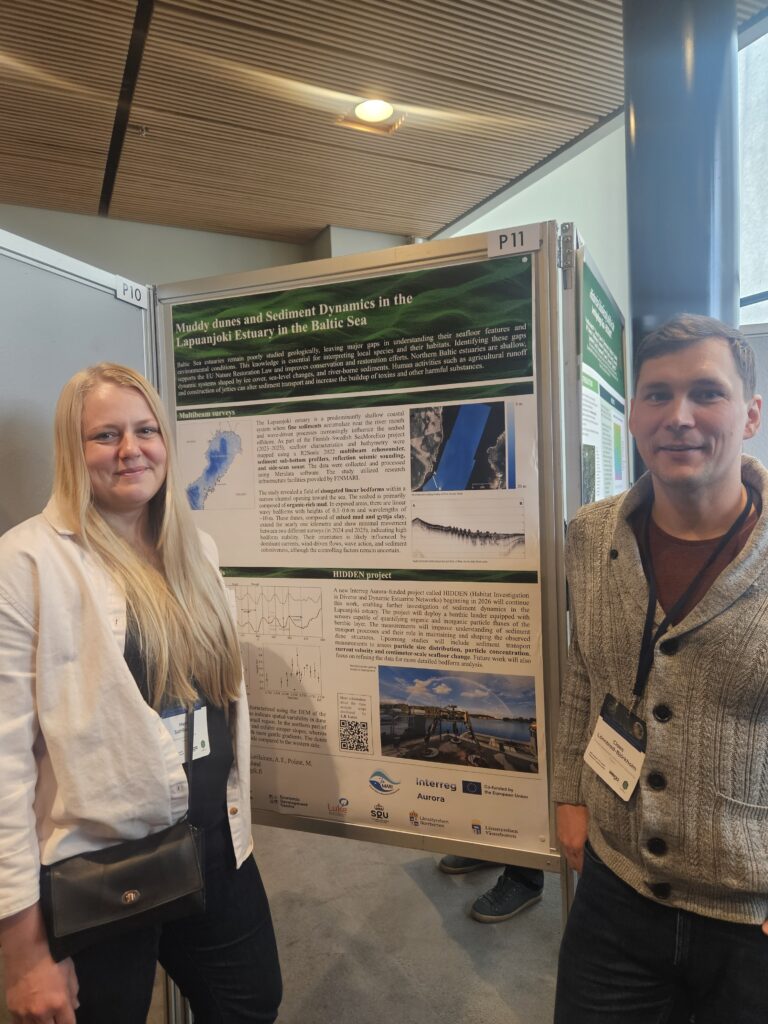

Photo: Magnus Hansson, County Administrative Board of Västerbotten, Helle Hamnevoll, County Governor of Troms and Finnmark, Petteri Koskinen, Regional State Administrative Agency for Northern Finland
Representatives from the two northernmost counties in Sweden, as well as from Finland and Norway, have met to discuss how to strengthen interregional cooperation related to the ability to deal effectively with uncontrolled movement of people and to take care of refugees.
Approximately 80 participants gathered in Skellefteå when the third International Cooperation Course, ICC25, was held in October 2025. ICC is an annual international cooperation course for individuals who hold key positions within total defence. The point of departure is the regional and interregional level. By bringing together experts from local, regional, and national levels, the course promotes a comprehensive perspective and enhances system understanding.
The core of the course consists of scenario-based discussions aimed at identifying needs, opportunities, and challenges related to the course’s focus area. In addition, several interesting and influential speakers have contributed with the exchange of experiences and expertise — among them representatives from the Red Cross, the migration agencies of Finland, Norway, and Sweden, the Swedish Civil Contingencies Agency (MSB), and the NATO Multinational CIMIC Group, a NATO function focusing on civil-military cooperation.
Focus Area: NATO’s Third Baseline Requirement
Within NATO, there are seven areas — or capabilities — identified as particularly important for strengthening civil resilience. During ICC25, the focus was on NATO’s third baseline requirement: the ability to deal with uncontrolled movements of people. The course also addressed the planning and execution of mass evacuations across borders, as well as the reception and care of refugees.
Society’s Capability
Society’s ability to manage uncontrolled movements of people, mass evacuations, and the reception of refugees between countries faces a range of complex and often simultaneous challenges that require cross-border cooperation — not least when it comes to information sharing.
Another key issue in this area concerns the use of transportation networks — for example, if military movements are taking place at the same time as refugees are moving along the roads. This requires coordination between civilian actors and the Armed Forces, both to avoid disruptions to military operations and to protect refugees. According to international humanitarian law, we also have an obligation to keep civilians and combatants separated to reduce the risk of civilians being affected by the consequences of war.
Being forced to flee one’s home — and possibly even one’s homeland — can be an immense strain on any individual. In the management of refugees, it is important to consider groups that may be particularly vulnerable, such as women, children, and persons with disabilities. Fundamental rights must also be upheld in times of crisis. Society should be characterized by legal certainty, respect for the individual, and the safeguarding of democratic principles — even under pressure.
Communication was another area discussed during the event. Information and communication are crucial — both internally between authorities and externally, to the public and to those directly affected. It must be clear, accurate, and coordinated. Language barriers, technical obstacles, and disinformation must be addressed.
Linda Hällgren, project manager and crisis and contingency officer at the County Administration Board of Västerbotten:
“The greatest success for this year’s course has been the collaboration with responsible national-level actors, both in the planning and implementation of the course. This gives weight to our work while also giving us the opportunity to make a concrete contribution to planning efforts in this area. Moreover, we have unique conditions in the northern parts of the country, and in this way, we can raise awareness about the region — both among those of us working here and among actors with national responsibilities.”
About the International Cooperation Course, ICC
The International Cooperation Course (ICC) is jointly organized by six regional authorities in northern Norway, Finland, and Sweden. The authorities collaborate within the framework of the High North Cooperation.
ICC is part of the project High North Civil Preparedness Forum, which is funded through Interreg Aurora.