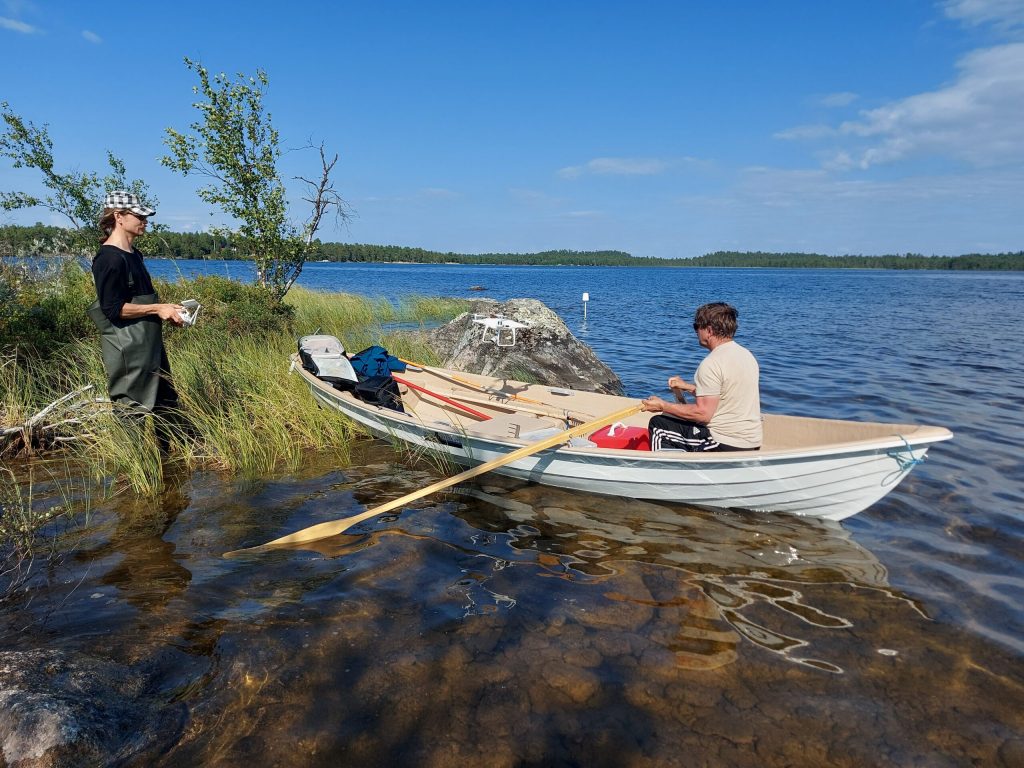
The overall objective of the Interreg Aurora funded project Our Precious transboundary waters is sustainable Finnish-Norwegian water catchment management to conserve biodiversity and improve the quality of living for the population.
The project documents the environmental recovery in the Paatsjoki river basin following the closure of the nickel smelter. An open-access database on Atlantic salmon has been compiled for the Neiden River. The risk posed by the salmon parasite Gyrodactylus salaris is being prevented in northern transboundary waters. A new tool has been developed for monitoring the genetic status of brown trout.
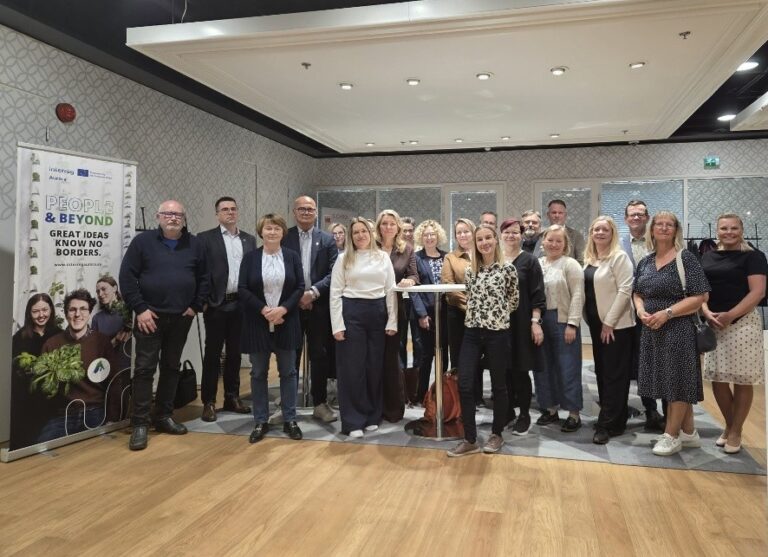
Environmental authorities and research institutions on both sides of the border have joined forces to carry out this project, which brings together nine partners and one associated partner from Finland and Norway, as well as an additional associated partner from Sweden.
Results from Finnish–Norwegian transboundary water cooperation:
- Environmental status in the Pasvik river basin
- The reduction of heavy metal concentrations after the closure of the Nikel smelter has been confirmed through several types of monitoring: water samples, fish tissues, sediment cores and moss samples all show clear signs of environmental recovery.
- Moss and sediment analyses indicate that nickel levels have already decreased by around 90% since 2020.
All results are being compiled into a joint environmental status report during 2026.
- Genetics of large brown trout in the Pasvik–Inari region
The project has:
- developed a comprehensive SNP panel (SNP library) suitable for large‑scale and long‑term genetic monitoring of the trout populations; the panel significantly improves the ability to monitor population structure, genetic diversity and long‑term trends,
- expanded genetic analyses of trout samples from the Pasvik–Inari catchment, providing new information on population differentiation, kinship patterns and genetic diversity,
- harmonised laboratory and analytical methods between Norwegian and Finnish research institutes, enabling more reliable cross‑border comparison.
These results support joint conservation and management of trout populations and improve the basis for planning stocking programmes.
- Neiden river salmon
- Based on studies in the Gallojohka tributary, the final missing spawning target in the Neiden river system has now been defined, completing the assessment for the entire watershed.
- A public, cross‑border Neiden river salmon database has been created. It compiles up‑to‑date scientific data on the status of Atlantic salmon and is already used in the joint Finnish–Norwegian scientific status assessment.
The database provides a solid basis for salmon stock assessment and management decisions.
- Gyrodactylus salaris
- An environmental DNA (eDNA) method for detecting Gyrodactylus salaris has been developed and tested, making monitoring faster and more efficient.
- Joint Finnish–Norwegian contingency and response planning for suspected or confirmed infections has progressed. Guidance for suspicion and outbreak scenarios is under development, advanced through expert workshops, field visits and meetings.
- Videos, podcasts and social media campaigns produced within the project have increased awareness of Gyrodactylus salaris risks, particularly among anglers and outdoor recreationists. Targeted promotion has strengthened their visibility, and the materials are used both online and at various events.
The Our Precious transboundary waters project has strengthened cooperation between Norway and Finland and generated new, concrete knowledge on the environmental status of shared transboundary waters, the condition of key fish populations, and the risks posed by Gyrodactylus salaris, as well as measures to prevent its spread. These results will benefit a wide range of actors: local residents, including Sámi communities whose culture and livelihoods are closely connected to the river systems; authorities and fisheries managers responsible for environmental status, fish stocks and sustainable fishing on both sides of the border; and research institutions that will make use of the combined datasets. Moreover, the project contributes to the broader international community by advancing methods such as eDNA monitoring and by strengthening cross‑border cooperation in the fight against G. salaris. Together, these outcomes provide a strong foundation for protecting and sustainably managing the river systems in the future.
Learn more about the project Our Precious transboundary waters