
A meadow of underwater plants on a shallow seabed in the northern Gulf of Bothnia. Photo: County Administrative Board of Norrbotten
Mapping of seabed conditions in the northern Gulf of Bothnia reveals high biological diversity. The environment in these marine areas is changing ever more rapidly as a result of post-glacial land uplift, climate change, and increasing human activity.
Within the Interreg Aurora funded project SeaMoreEco, geologists and marine biologists from Finland and Sweden have worked together to map sensitive environments in the northern Gulf of Bothnia, which are home to many unique underwater plants and animals. Until now, these areas have been insufficiently mapped. The overall aim of the project has been to test and develop methods for monitoring, conserving, and restoring biodiversity in shallow seabed habitats.
The project results have been presented in a number of sub-reports published on the SeaMoreEco website at the end of 2025.
“We know that shallow seabeds perform important ecological functions. But we still know relatively little about what they look like exactly, and what species occur and live there. If we are to take measures to protect or restore species and habitats, we need knowledge of their status and effective methods to follow up and monitor their distribution,” says Linnea Bergdahl, marine biologist at the County Administrative Board of Norrbotten.
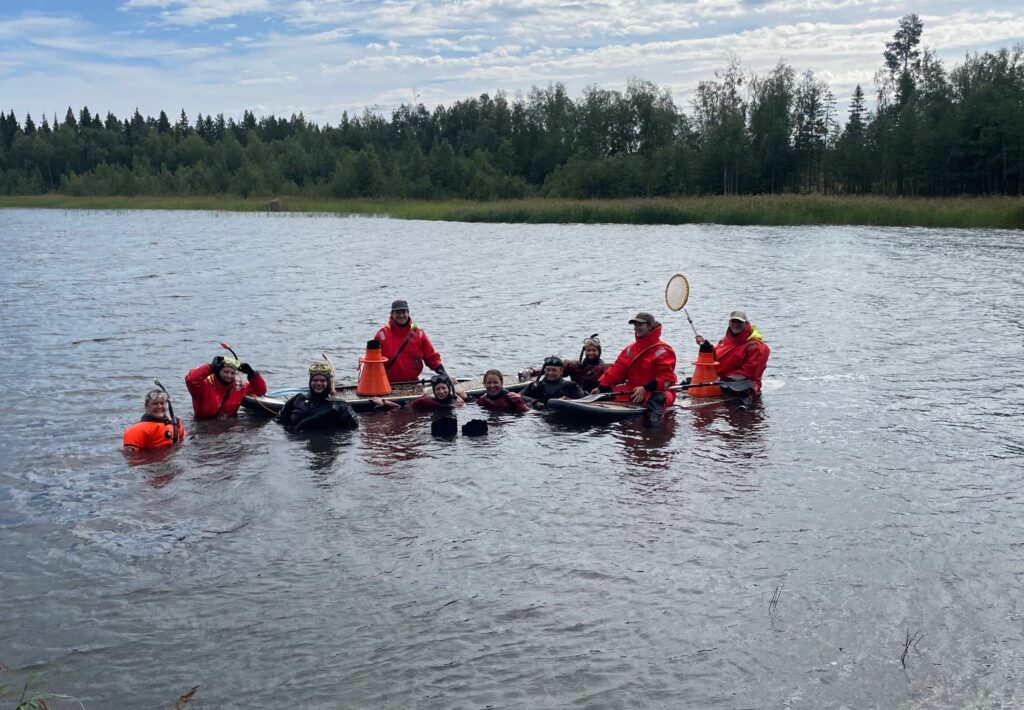
The overall aim of the SeaMoreEco project has been to test and develop methods for monitoring, conservation and restoration of biodiversity in shallow marine habitats. Photo: County Administrative Board of Norrbotten
The results and lessons learned from the project increase understanding of shallow underwater habitats in the north and help authorities and decision-makers make well-informed decisions for effective work in nature conservation, marine spatial planning, and marine protection measures. The cross-border cooperation between Sweden and Finland has contributed to increased data and knowledge exchange and coordination of measures benefiting both sides of the northern Gulf of Bothnia.
“Today we know much more about where sensitive shallow seabeds are located – and where they are not. This enables us to target measures such as protection or restoration where they are most needed. For residents around the Gulf of Bothnia, this means opportunities for an improved marine environment and more sustainable resource use,” Linnea Bergdahl explains.
When the project summarized its three years of field inventories and examined the occurrence of underwater vegetation on shallow seabeds, it revealed an extraordinary level of species diversity. Nowhere else in the Baltic Sea can you find as many different species of vascular plants.
Among other things, the project has provided proven methods for removing the invasive plant Elodea (waterweed) at a local scale. On a broader level, the project’s most significant achievement is the establishment of sustained cooperation and exchange with counterparts in Finland, as well as with marine geologists at the Geological Survey of Sweden and Finland’s Geological Survey of Finland.
Learn more about the project SeaMoreEco
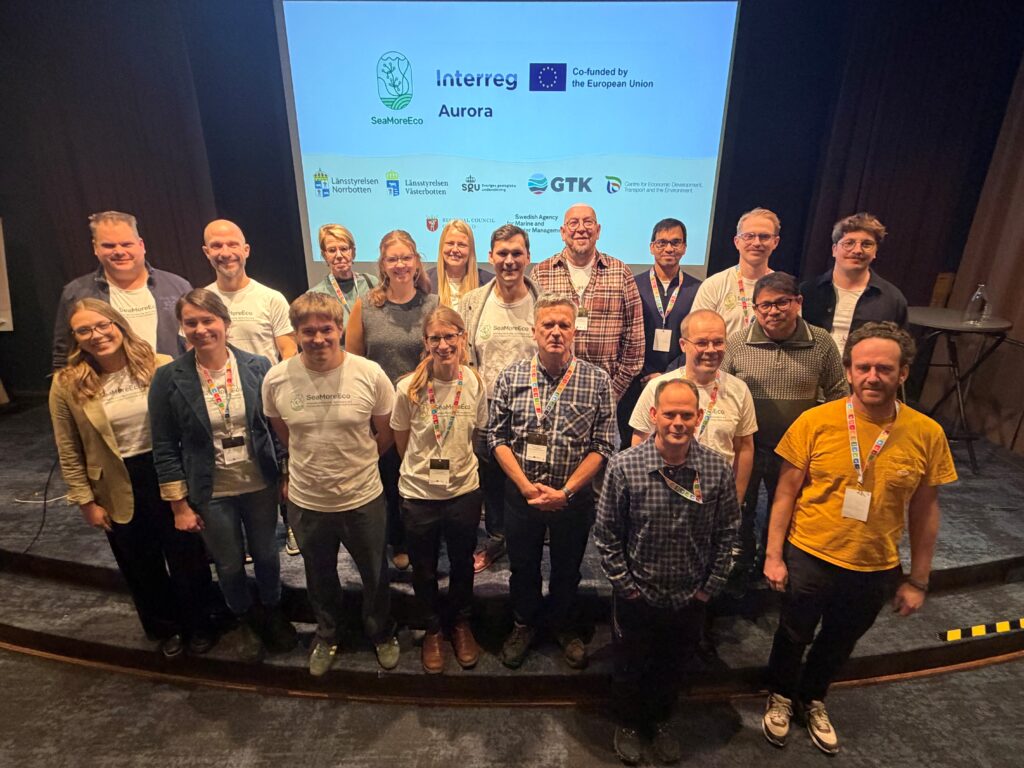
SeaMoreEco members and speakers at the final seminar. Photo: Andreas Egerup