
The Interreg Aurora funded project ICH EDU North aims to strengthen social sustainability by supporting practices and mindsets related to intangible cultural heritage in and through education and lifelong learning. The community-based activities will enhance competence in intangible cultural heritage and skill development through on-site and online education, lifelong learning, and joint marketing of career opportunities through cooperation between educational and education-related organizations. Developing new, extensive educational solutions and models, the project will support the preservation of cultural diversity and enhance the inclusion and equal treatment of people, with emphasis on minority cultures.
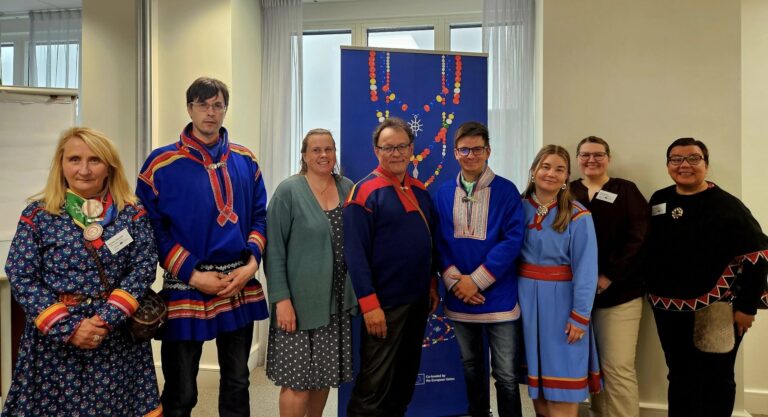
The activities include developing digital and scalable tools that help educators teach intangible cultural heritage (ICH) and traditional music, as well as establishing production models for a high‑quality online repository of detailed folk music learning materials. The project also creates new models linking traditional music and cultural heritage with entrepreneurship, strengthening regional identity, employability, and long‑term cultural sustainability. In addition, the piloted activities enhance cross‑sectoral cooperation between heritage communities, educators, and decision‑makers so that ICH can be better integrated into educational structures and policy development. A further focus is on strengthening minority cultures – including Sámi, Tornedalian/Meänkieli, Kvens, Romani, Swedish‑speaking Finns, and immigrant communities – by supporting their visibility, participation, and knowledge transmission within regional music education systems.
The ICH EDU North project, which will begin in early 2026, will partly build on the networks and expertise developed in the ICH North. The lead partner in the project is Centria University of Applied Sciences, and the partners are Kulturakademin, Västernorrlands Museum, The School of Music, Theatre and Art at Örebro University, and Framnäs Folkhögskola from Sweden, as well as Novia University of Applied Sciences, KulturÖsterbotten, and the Finnish Folk Music Institute from Finland.
Contact: Anni Järvelä, Project Leader, Centria University of Applied Sciences, anni.jarvela@centria.fi